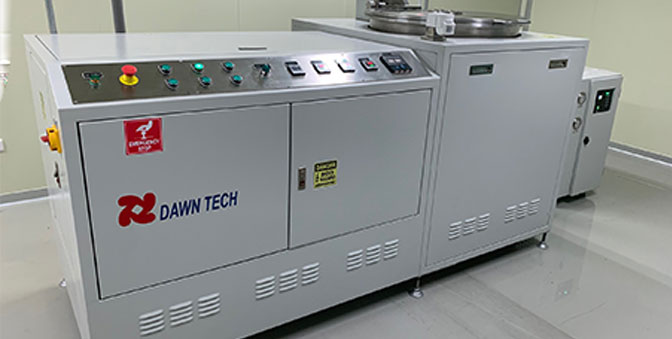
When you make high-end parts—like tools for doctors or electronics for flight—the protective coating must be perfect. Parylene coating works best because its method, called CVD, creates a perfect, sealed barrier that liquid coats cannot match.
Most companies should hire outside experts. Outsourcing this work to dedicated Parylene Coating Service Providers is smarter and cheaper.
Choosing the right provider is a major choice. It changes how your product performs, whether it meets government rules, and how fast you can sell it. Here is a simple plan for checking out potential partners.
1. Check Their Machines and Process
The quality of the Parylene Coating relies completely on perfect control of the CVD machines. Small errors in vacuum or temperature will ruin the coating. Start by asking about their physical setup.
Machine Size and Control
Do their chambers fit your large orders? Or can they only do small batches? Ask them how they ensure the vacuum stays stable. Stable conditions mean the coating is even on every part.
Thickness and Adhesion Proof
The coating thickness must meet strict numbers, sometimes just a few micrometers. A good provider must show you how they check this thickness after the coat is done. Do they use special scales or microscopes? They also need to prove the coating will stick and not peel off under normal use. Parylene Coating Service Providers should give you test reports and solid data right away.
2. Materials and Required Certifications
Parylene comes in different types. The type you use changes what the coat can do.
Different Parylene Types
The main types used by Parylene Coating Service Providers are:
- Parylene C: This one is best for most general uses. It has chlorine, which makes it an excellent barrier against water. Use C for circuit boards and parts that face high humidity.
- Parylene N: This one is the purest type. It is the best for electrical signals. Use N for high-frequency parts where you need signal integrity.
- Parylene VT/HT: This type handles very high temperatures, sometimes up to $350^\circ\text{C}$.
Make sure your provider can handle the exact type your product needs. Using the wrong one will cause your product to fail later.
Rules and Certifications
For medicine and flight, certifications are not optional; they are mandatory. Ask providers about:
- ISO 13485: You must have this if your parts go into medical devices or implants.
- ISO 9001: This confirms they have basic quality control rules in place.
- FDA Master File: If your part needs FDA approval, the provider must give you support, referencing their own files on the material used.
3. Cleaning and Masking Skills
The steps done before and after the CVD Parylene Coating Process are often where the mistakes happen.
Surface Cleaning
The surface must be spotless for the coating to stick. Ask what their standard cleaning steps are (e.g., plasma cleaning, solvents). Bad cleaning is the top reason the coating fails.
Masking Details
Parylene coats everything. Areas that must stay uncoated—like connection pins or test points—need precise masking. This needs expert staff and good materials. Ask to see how complex their masking work gets and what their success rate is. They must prove they can define the exact edge of the coating without damaging the components.
Inspection
After the coating is done, the provider must clean the parts and inspect them well. Do they use UV light to check the film? Do they use magnification? How carefully they check the final product tells you everything about their commitment to quality.
4. Business Needs and Price
Even the best provider is useless if they cannot meet your production schedule.
Speed (Turnaround Times)
How long do they usually take for a batch? Can they do rush orders? Long waits will slow down your manufacturing.
Security
They will handle your sensitive designs. They must have tight security rules to protect your intellectual property. Ask about their building access rules and how they handle your data.
Cost
Get a clear, detailed price quote. Picking a provider just because they are the cheapest is a dangerous move here. A small saving now could lead to huge costs later if your products fail. Good Parylene Coating Service Providers will usually offer a low-cost sample batch for testing before you sign a large production contract.
Conclusion Choosing the right partner from the Parylene Coating Service Providers available is all about managing risk. Look first at their quality control, their necessary certifications (like ISO 13485), and their proven ability to handle parts cleanly. This time spent checking them out will save you money and headaches later when it comes to product failure and passing inspections.