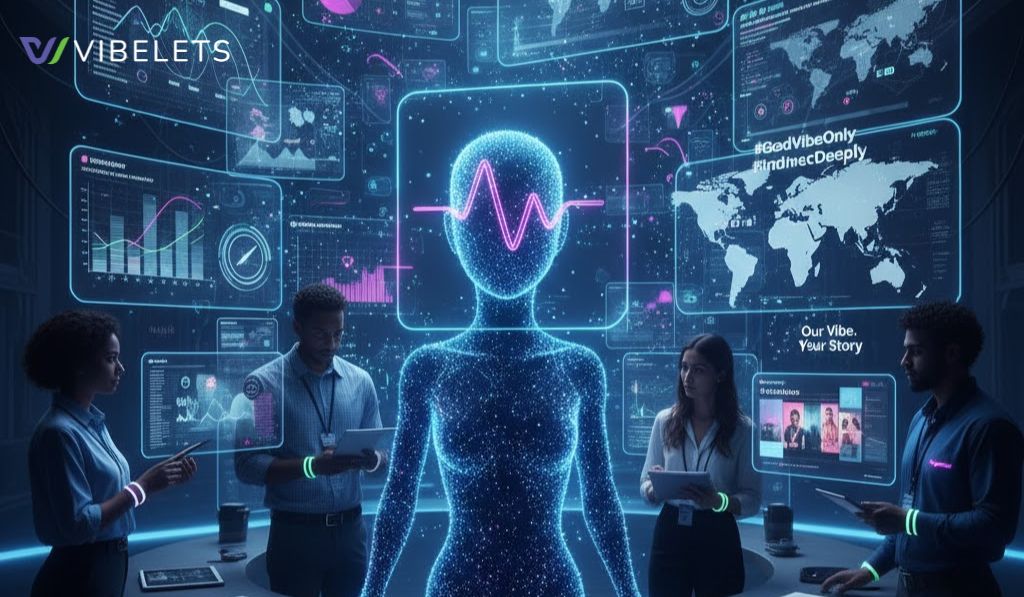
In 2025, the marketing world isn’t just about clever keywords, big budgets or the flashiest visuals. It’s about vibe. It’s about the feeling your brand gives the moment someone interacts with it. That’s where a vibe marketing platform comes in — and why Vibelets.ai is poised to lead the way.
1. The Rise of ‘Vibe’ in Marketing
The term “vibe marketing” has gained strong traction in recent years, especially as audiences become more media-savvy and less tolerant of overt sales pitches. According to one recent guide, vibe marketing “is a strategy that focuses on creating an emotion around a brand rather than explicitly promoting specific products or features.”
In other words: It’s not just what you say; it’s how it feels. The aesthetic cues, the tone, the emotional resonance, the cultural alignment — all of these combine to form the brand’s “vibe”.
As one trend piece put it, marketing is shifting so that “rather than starting with keywords or demographics, vibe marketing begins with a feeling, whether it’s a mood, a cultural reference, or a specific emotion”
So what exactly does this mean in a platform format? Let’s dig in.
2. Defining a Vibe Marketing Platform
A vibe marketing platform is a software or system that helps brands build, manage, optimize and scale marketing campaigns — but crucially, the campaigns aren’t solely driven by features or direct selling. They are guided by vibe — emotional resonance, mood alignment, cultural relevance — and use automation and artificial intelligence to maintain that vibe across channels and at scale.
For example, Vibelets.ai describes itself as “an AI-powered Vibe Marketing software that lets you build, optimize and scale ad campaigns using modular, context-aware components called Vibelets.” Vibelets
In simple terms: the platform ensures your brand’s emotional language, tone, creative variations, campaign logic and optimisation all adhere to a consistent “vibe” while allowing you to test and iterate rapidly.
3. Why It Matters in 2025
a) Saturation of Features
We live in a marketplace filled with competing claims: faster, smarter, AI-powered, more integrated. But when every product shouts the same things, the edge comes from how it makes you feel. One guide states: “We’ve hit feature saturation… buyers are … judging less by what a product claims to do, and more by how it makes them feel.”
b) The Need for Speed & Emotion
Because attention is fragmented, brands must launch with speed and emotional clarity. A vibe marketing platform, by offering AI-based automation and context-aware creative modules, is uniquely positioned to help marketers move fast, maintain consistency and evoke the right emotion.
c) Scaling Authenticity
Consistency in vibe — across ad creative, landing pages, social media, messaging, remarketing — is challenging without tools. A platform built for “vibe” ensures you’re not just repeating your message, but preserving the feeling behind it even as you scale.
4. Key Features of a Vibe Marketing Platform
Here are the features you should expect (and that Vibelets.ai offers):
• Modular, context-aware creative components
Instead of building one static ad, you build many variations that share the same emotional foundation (the “vibe”). Vibelets.ai calls these “Vibelets”. Vibelets
• Multi-channel integration
You should be able to run campaigns across platforms (Meta, TikTok etc) from a central hub to maintain vibe-consistency. Vibelets supports Meta and TikTok currently. Vibelets
• AI-driven optimisation
The platform uses data to pause underperforming creative, scale winners, reduce ad-waste, and maintain emotional alignment. (Vibelets mentions “faster optimisations with AI powered decisioning (pause losers, scale winners)”.) Vibelets
• Real-time tracking & strong data link-up
It’s vital to know not just clicks, but sentiment, cultural resonance and creative fatigue. Vibelets claims to use official APIs for real-time ad spend and match revenue via your tracker. Vibelets
• Brand-vibe governance
Your platform should help you define the vibe clearly (values, tone, emotional triggers) and enforce it across assets — so even as you create dozens of variants, they all “feel” like your brand.
• Rapid iteration & creative testing
Because the vibe is often subtle, you need tools to test small changes in tone, emotion or cultural reference quickly and see what resonates.
5. How to Use a Vibe Marketing Platform: Step-by-Step for 2025
Here’s a practical workflow you can follow, using a vibe marketing platform like Vibelets.ai:
Step 1: Define Your Brand Vibe
Decide how your brand should feel. What emotions, values, cultural cues, tone of voice? This isn’t just visuals. It’s: How do you want someone to feel when they see your ad, land on your site, or read your email? (Guides suggest elements like emotional resonance, authenticity, cultural relevance & aesthetic consistency.)
Step 2: Audit Your Current Marketing
Check how your current campaigns, social media, website, messaging reflect (or fail to reflect) your desired vibe. Where’s the mismatch? What channels dilute the vibe?
Step 3: Select & Set Up the Platform
Choose your vibe marketing platform (e.g., Vibelets.ai). Connect your ad accounts (Meta, TikTok), tracking tools (Voluum, RedTrack, etc) as supported. For Vibelets, they currently support multiple ad accounts with no fixed limit. Vibelets
Step 4: Build Vibe-Led Campaign Logic
Use the platform to create modular creative elements (“Vibelets”) that all reflect the same emotional tone. Create campaign logic to test variations rapidly, monitor not only conversions but emotional/engagement metrics.
Step 5: Launch & Iterate Quickly
Deploy your campaigns across channels. Use AI-driven optimisation to identify which creative modules are resonating and which are not. Pause or adjust underperformers, scale winners.
Step 6: Measure Both Emotions & Outcomes
Beyond traditional metrics (CTR, CPC, ROI) add metrics like emotional sentiment, engagement time, share rate, brand recall. Use the platform’s analytics to tie those deeper-feel metrics to business outcomes.
Step 7: Maintain & Evolve the Vibe
As your audience evolves, culture shifts, new trends emerge, your brand’s vibe must adapt. The platform helps you stay agile — update modules, refresh tone, maintain consistency across new touchpoints.
6. Real-World Examples & Use Cases
While specific case studies for Vibelets.ai may be limited publicly, the concept of vibe marketing is already being used widely. For instance, a recent article states:
“A brand’s vibe is its emotional clarity and cultural alignment.”
Brands that succeed in this space are those where “you feel what they’re about before they even pitch you.”
Use cases might include:
- A D2C apparel brand using Vibelets.ai to test 50+ creative variations across Meta and TikTok, each anchored around a core mood (“urban rebellion”, “cozy minimalism”) and tracking which variation creates the strongest community-engagement.
- A mobile app launch where instead of focusing on features (“fast sync”, “smart notifications”), the campaign focuses on “the vibe of freedom & connection” and uses modular creative to evoke that feeling across ads, in-app messaging and push notifications.
7. Benefits of Using a Vibe Marketing Platform
- Stronger emotional connection with your audience: By focusing on feelings and mood, you differentiate your brand from feature-driven competitors.
- Faster creative iteration & launch: Modular design and AI optimisation means you can test variations more rapidly.
- Consistency at scale: Maintain your brand’s unique tone, feeling and culture across many channels and campaigns.
- Better cost-efficiency: By optimising for vibe resonance and engagement, you reduce wasted ad spend on creative that doesn’t connect — Vibelets.ai claims “cutting wasted ad spend with automated audits”. Vibelets
- Cultural relevance & adaptability: The platform helps you stay on-trend, stay aligned with your audience’s values and mood.
8. Challenges & How to Overcome Them
- Measuring ‘vibe’ is harder than conversions: Because vibe is emotional, it may not map easily to traditional KPIs. Use sentiment analysis, brand recall surveys, engagement depth.
- Maintaining authenticity: If your brand tries too hard or feels inauthentic, the emotion will backfire. Authenticity is key.
- Consistency across touchpoints: With multiple channels (ads, emails, website, support), the vibe must carry through. Use your platform to unify guidelines and modules.
- Keeping up with culture & trends: The “vibe” that resonates today may not tomorrow. Be ready to adapt and iterate fast.
- Risk of over-automation: While AI and automation are powerful, human oversight remains critical to ensure the vibe aligns with brand values and doesn’t become generic.
9. Why Vibelets.ai Is a Smart Choice for 2025
- Built specifically for vibe marketing — not just generic campaign automation.
- Supports creative modularity (Vibelets) and multi-account link-up.
- Integrates with ad platforms like Meta & TikTok and major tracking tools. Vibelets
- Designed to save cost via automated audits and creative fatigue detection: “Saved per week per buyer by stopping CPC spikes and creative fatigue early” — as per their site. Vibelets
- Ideal for e-commerce, D2C brands, indie marketers wanting to scale with emotional intelligence.
- Positioned for the future: With marketing shifting toward emotional resonance, vibe marketing platforms like Vibelets.ai are ahead of the curve.
10. Getting Started with Vibelets.ai
If you’re curious how to adopt a vibe marketing platform, here’s a simple roadmap using Vibelets.ai:
- Sign up for Vibelets.ai and link your ad accounts (Meta, TikTok).
- Input brand guidelines: what mood, tone, emotion you want to evoke.
- Upload or create your first set of Vibelets (modular creative elements) aligned to your vibe.
- Use the platform’s automation to launch a test campaign; track not just conversions but engagement and emotional resonance.
- Use AI optimisation to pause under-performing modules, scale the winners.
- Expand: roll the same mood across other channels, refine your modules, iterate based on data.
- Review: Use sentiment + engagement metrics to ensure the vibe is consistent and evolving with your audience.
11. Conclusion
In 2025, marketing isn’t just about being seen — it’s about being felt. A vibe marketing platform helps you ensure that from your first ad to your last remarketing message, from creative to landing page, you’re delivering a consistent emotional experience. For brands aiming to stand out in an over-saturated marketplace, focusing on vibe — via platforms like Vibelets.ai — is no longer optional; it’s essential.